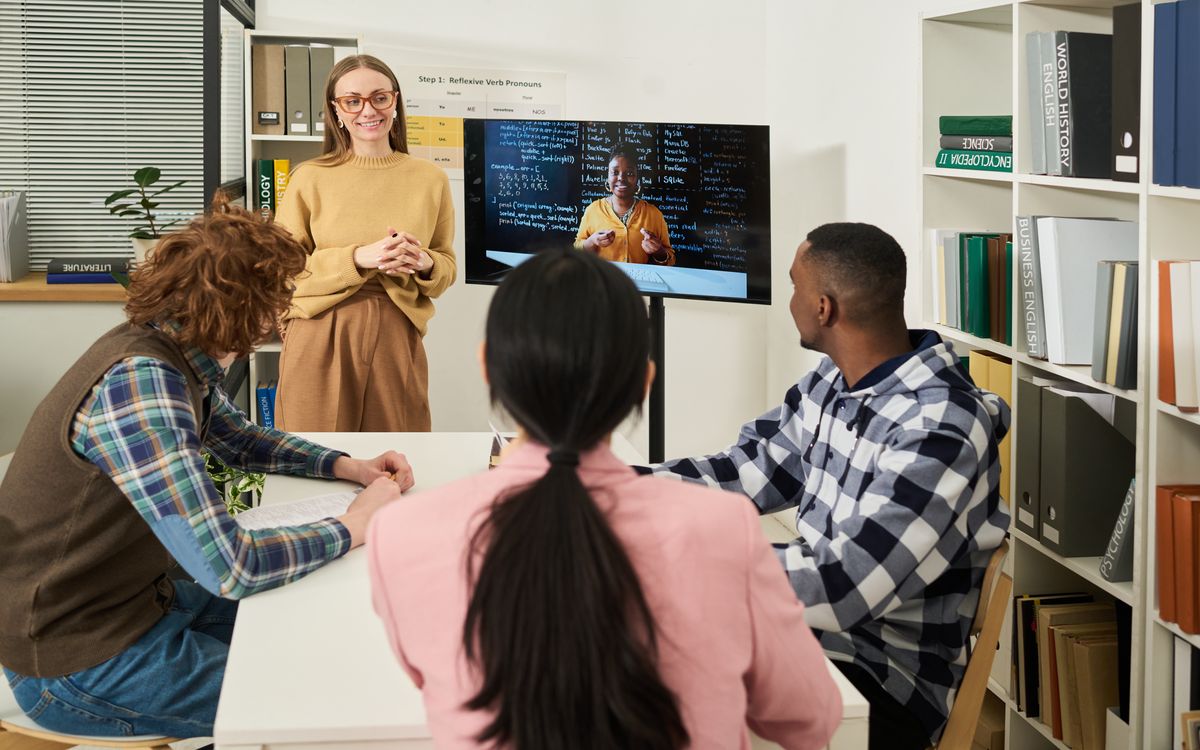
 grades 6-8
Middle School CS: Grades 6-8
Middle school is the transition point. Students move from block-based exploration to writing actual code (or at least code-like pseudocode), from sorting buttons to understanding how computers represent data, and from "follow the instructions" to "design your own algorithm." This can be exhilarating and frustrating in equal measure. The lesson flow below is designed to manage that tension: enough structure to prevent chaos, enough freedom to let students think for themselves. You will find warm-up ideas, a practice-heavy session structure, differentiation strategies, materials, and the snags that come up in nearly every 6-8 CS class.
45 to 55 minutes per session. This band benefits the most from consistent, weekly periods.
Browser-based coding environment, whiteboard for pseudocode demos, printed debugging checklists.
The biggest challenge is the range. Some students arrive having coded for years. Others have never opened a text editor. Plan for both.
Suggested Lesson Flow
Warm-Up (5 to 7 minutes)
- Algorithm of the day: Show a short algorithm (in pseudocode or flowchart) and ask students to predict what it does before you trace through it.
- Binary challenge: Display a binary number and ask students to decode it. Gradually increase difficulty over the weeks.
- Bug of the day: Show a 3-line program with a bug. First person to find it explains the fix.
Mini-Lesson (10 minutes)
Introduce or extend one concept. Use live coding (typing and thinking out loud) rather than slides. Students learn more from watching you make and fix mistakes than from seeing polished final products.
Practice (20 to 25 minutes)
The bulk of the session. Students work individually or in pairs on a structured task. Good tasks at this level have a clear starting point but multiple valid approaches. Walk the room and ask:
- "Can you explain what this line does?"
- "What happens if the input changes?"
- "Where did you get stuck, and what did you try?"
Reflection (5 to 8 minutes)
Class discussion or exit ticket. At this age, written reflections work well: "Write one thing you figured out today and one thing you are still unsure about." Collect them and use the responses to plan the next session.
Differentiation Tips
- For beginners: Start with heavily scaffolded tasks. Provide starter code with comments that say "your code goes here." Gradually remove scaffolding as confidence grows.
- For experienced students: Add constraints. "Solve this without using a loop." "Make it work with 100 inputs instead of 10." Constraints force creative thinking.
- For reluctant students: Connect CS to their interests. A student who loves basketball might engage with a stats-tracking program. A student who draws might respond to generative art projects.
- Group work: Assign clear roles (coder, tester, documenter) that rotate each session. This prevents one student from doing all the work.
Materials List
- Browser-based coding environment with text-based language support
- Whiteboard or projector for live coding demonstrations
- Printed pseudocode templates and flowchart paper
- Debugging checklist (laminated for reuse)
- Binary/hex encoding worksheets
- Exit ticket templates (half-sheet, quick to collect)
Common Snags and How to Handle Them
- Syntax errors overwhelming students. Text-based coding introduces semicolons, brackets, and case sensitivity. Start with a language that has minimal syntax, or use a block-to-text bridge tool for the first few weeks.
- "But it works on my friend's computer." Environment differences are real. Standardize the coding environment and version at the start of the term.
- Students not reading error messages. Teach this explicitly. Show students that error messages usually point to the exact line and type of problem. It takes practice, but reading errors is a learnable skill.
- Wide skill gaps. Use tiered tasks: a base version everyone completes, and extensions for students who finish early. This keeps the class moving together without holding anyone back.
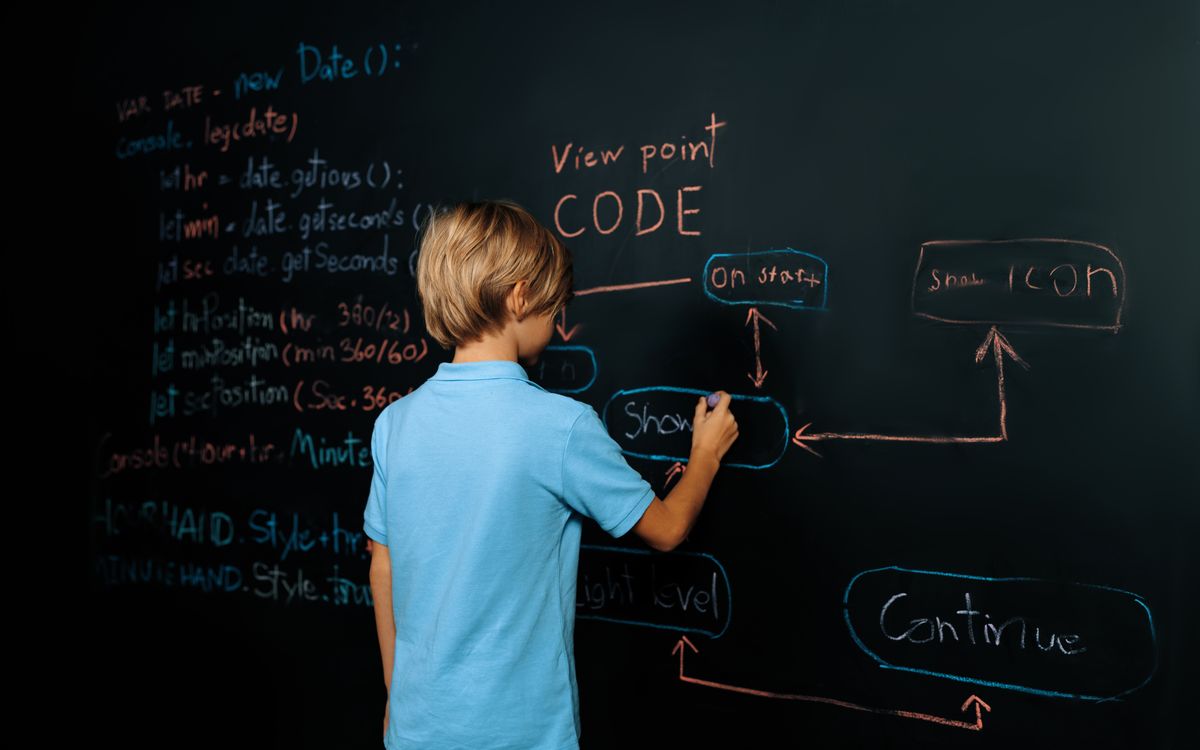
What Comes Next
Students heading into the high school band (9-12) will encounter abstraction, data structures, algorithm analysis, and larger software projects. The programming fluency and debugging habits built in middle school are what make those topics accessible rather than overwhelming.